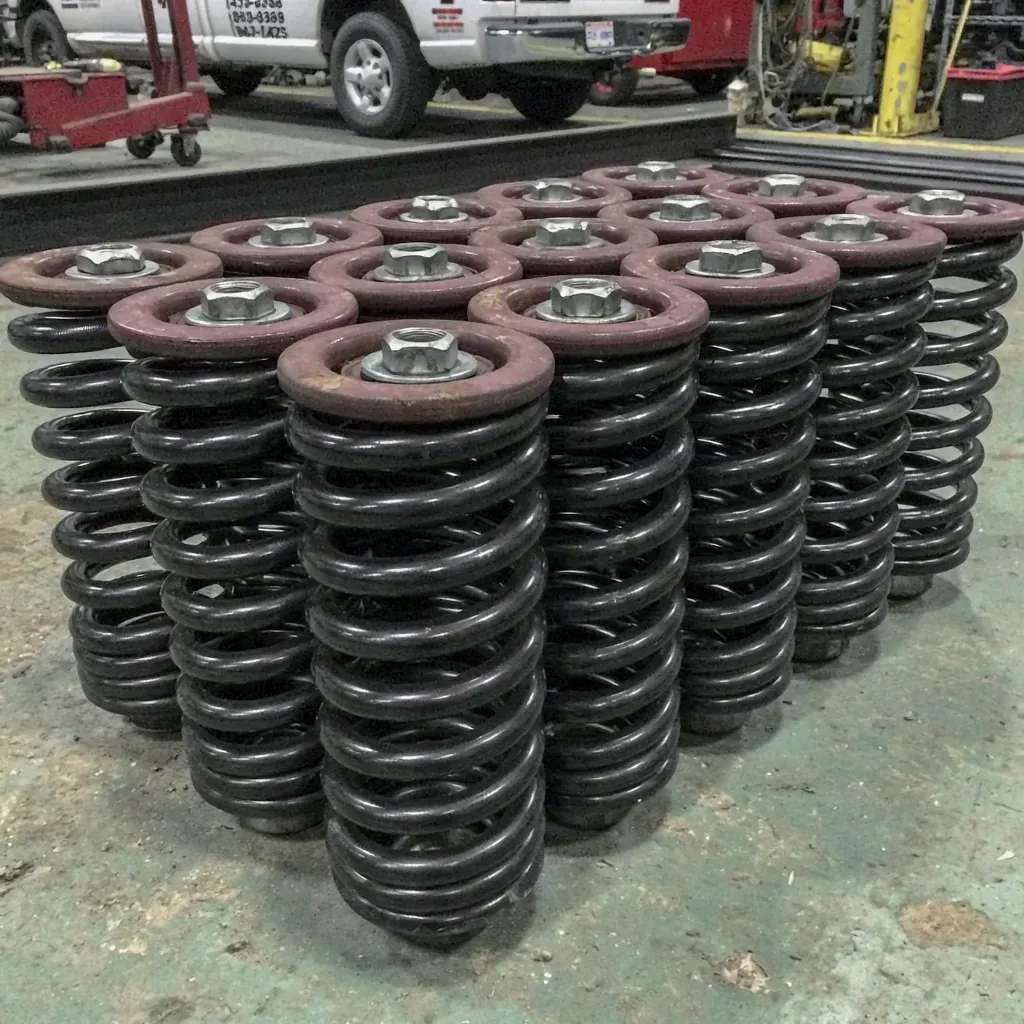
How to Lubricate Garage Door Springs in Hamilton
In Hamilton, near Marcum Park, Marsh Park, or Home Avenue Park, lubricate moving contacts and leave spring tension untouched.
Use silicone lubricant on spring surfaces and at roller and hinge pivots; keep the track clean and dry so it does not hold grit. Never handle winding hardware. If the door still feels heavy after lubrication, the spring has lost lifting ability and lubricant cannot restore it.
Silicone on Exposed Coils and Bearings
Garage door maintenance costs depend on which parts need attention; lubricant only addresses friction at contact points. In Hamilton, silicone lubricant can coat the outside of an intact spring coil and the bearings that let connected parts rotate. That thin layer may quiet a dry rubbing sound, but it does not add lifting power. A hinge pivot is another contact point where rubbing can develop as the door moves. Leave the spring tension system alone and treat the sound as a clue, not proof that the spring needs oil.
A squeal as the door bends between sections may come from a hinge pivot, while a rough rolling sound can point to roller bearings. Apply silicone lubricant to the pivot or bearing rather than coating the whole assembly. Near Founders Park, as elsewhere in Hamilton, a rattle can also come from a loose or worn part; spraying every surface may hide the sound briefly without addressing its source. Watch from a safe position during ordinary travel, and note where the noise starts before deciding whether lubrication fits.
Use a garage-door silicone spray sparingly, aiming at the joint or coil surface you can reach without stretching or reaching around hardware. A short, controlled spray helps keep product off the floor and nearby surfaces; wipe away any run-off. Keep the track free of lubricant, since residue can hold grit where rollers pass. Choose no WD-40 for this job: a penetrating oil can thin out or collect dirt instead of leaving the intended protective film. Keep each application on the visible contact surface instead of spraying across nearby hardware.
Lubricating Rollers, Hinges, and Tracks
The wheel of a roller rides along the track, but its bearing is the part that turns. Lubricate the bearing, not the rolling surface, and put a small amount at hinge pivots where the sections articulate. If a roller is cracked, wobbles, or sticks, lubricant will not make it sound again; it needs inspection as a worn part. Hamilton garages near Elk Creek and across town have the same distinction: a dry joint may respond to silicone, while damaged hardware calls for a different remedy.
A product labeled for garage-door hardware helps you avoid using a lubricant that washes away or leaves sticky residue. Silicone lubricant suits exposed spring coils, bearings, and hinge pivots; apply only enough to leave a light film. Do not spray the entire door mechanism or coat the cable path. A track should remain clean of lubricant so grit does not build into a paste under the rollers. If spray lands on a surface by mistake, wipe it up before operating the door.
Listen for a change after treating a dry pivot or bearing: a reduced squeak can indicate that contact friction was part of the noise. It does not establish that every part is sound. A loose fastener needs attention at the fastener itself, since lubricant only reduces friction. In Hamilton, a homeowner can observe those symptoms from outside the door’s path; judging a spring’s condition by sound alone is not a safe substitute for inspection.
Keep Tension Hardware Untouched
Keep lubrication to surfaces you can reach without putting a hand, cloth, or tool between spring coils. Never handle winding cones, set screws, cable drums, lift cables, or bottom brackets, and never wind or adjust spring tension. Those are not lubrication points: they are part of a loaded assembly, and even a small adjustment can release stored energy. In Trenton or Hamilton, the safe boundary is the same—apply product only to an exposed surface that needs it, and leave spring adjustment to a pro.
In a Hamilton garage, the roller wheel travels inside the track, but its bearing or stem is the contact point that needs silicone lubricant. Coating the rail leaves a film where dirt can collect and the wheel rolls. Apply lubricant at roller bearings and hinge pivots; keep the track channel and wheel tread dry. Near River Center or West Chester, the same distinction holds: lubricate the joint that turns, not every surface the door passes.
When Lubricant Cannot Restore Lift
Before applying lubricant, locate the noisy contact point so the film goes where it is needed. Notice whether the hinge or roller noise changes and whether travel remains steady. If the same grinding or squeal continues, adding more product is unlikely to answer the question; the part may be worn, misaligned, or otherwise damaged. Hamilton homes vary in door hardware, so use the sound and motion you can observe rather than coating every joint by habit.
Lubricant has a narrow job: reduce friction between moving surfaces. It cannot renew a spring that has lost lifting strength, repair a frayed cable, or make a damaged roller round again. That distinction matters whether your garage is near Founders Park or elsewhere in Hamilton. If the door remains difficult to move after a suitable joint is lubricated, stop operating it and keep your hands away from the loaded parts until they can be checked.
Where Silicone Lubricant Belongs
- Use a small amount of garage-door silicone on an exposed coil or bearing; wipe any run-off before it reaches the floor.
- Lubricate hinge pivots and roller bearings, not the roller’s running surface or the track where dirt can collect.
- If the door jerks, hangs crooked, or feels heavy, stop operating it; do not reach for winding or cable hardware.
- For exposed coils and bearings, use a light silicone spray; quieter motion is not proof that a weak spring has regained lifting force.
- Apply a little lubricant where roller stems and hinge pivots move; keep the track surface free of spray so grit does not build up.
- Skip WD-40 and do not handle winding cones, cables, or bottom brackets; lubrication cannot restore a tired spring or make tension hardware safe.
Questions Answered
How often should I lubricate my garage door?
No. WD-40 is a penetrating oil, so it can run off working surfaces and leave residue that catches grit. Use silicone lubricant made for garage-door hardware on the intended contact points instead. Use a small amount and check that it remains on the intended contact surface.
Can silicone spray make a tired garage door spring lift again?
Listen for grinding or repeated squeaks, which may point to worn rollers or hinges rather than a need for more lubricant. Skip WD-40 and thin penetrating oils, which can wash away and leave grit behind. In a Hamilton garage near Bicentennial Commons, residue on the track can form a dirt stripe where rollers travel. If the noise remains, lubrication may not be addressing its cause.
Which garage door parts should I keep free of lubricant?
Silicone lubricant can reduce friction at an intact spring coil, roller bearing, or hinge pivot. It cannot make a fatigued spring lift properly again. Keep lubricant on the coil’s outer surface and away from its tension hardware.
Still Heavy After Lubrication?
If the door looks uneven as it opens, stop using it and ask the licensed pros we connect you with to check its balance.
Call +15139620870