Read the Stripe From a Safe Distance
1. If the stripe is not visible from the floor, leave it unread rather than moving closer. A painted stripe on a garage door spring is an identification mark, not a report on whether the coil is sound. In Hamilton, note its color and which spring carries it without reaching toward the hardware. A clear mark can help narrow down the spring’s type or size; chipped paint, grime, or a shadow can make the color uncertain. Keep your hands away, especially if the door is raised or the spring looks damaged.
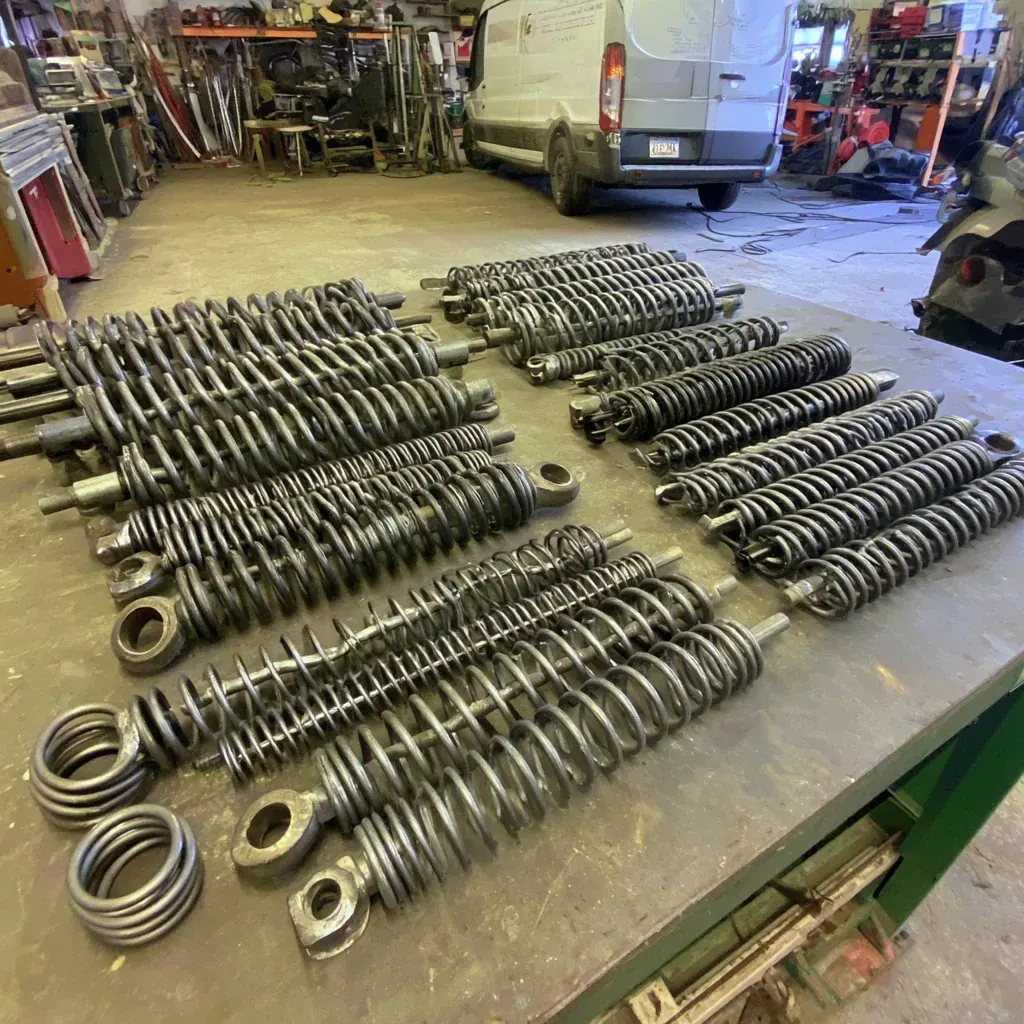
2. For a torsion spring, the color code commonly identifies wire size. Record the color as a visual detail before using any reference to interpret the spring. Include the spring type in your note so the color stays tied to the hardware it describes. The code gives people a shared way to describe a spring characteristic; it does not tell you the door’s full weight or confirm that a spring is right for a particular Hamilton door. Treat the color as a label to record, not a verdict.
What Torsion Spring Colors Identify
3. A torsion spring is a coil carried on a shaft above the door opening; as it releases stored twist, it helps raise the door. Its stripe is applied to the coil, so first confirm you are looking at that kind of spring before interpreting the mark. If the door has an enclosed tube instead of visible coils, the usual color-code approach may not apply. Around Hamilton, make a note of what you can identify from a safe distance and leave any hidden or unclear hardware for the pros we connect you with.
4. Read a torsion stripe as one part of the spring’s identity, not a complete replacement specification. Wire size works together with inside diameter and spring length to determine how the spring suits the door. Two springs with a similar-looking mark may still differ in a way that matters to the counterbalance. That is why a homeowner in Hamilton should not select a replacement from color alone. A pro can compare the mark with the hardware and door requirements before deciding what belongs there.
What a Stripe Cannot Confirm
5. A readable stripe cannot tell you whether a spring is cracked, worn, or still doing its share of the lifting. Do not operate the door just to see whether a readable stripe matches its movement. In Hamilton, even a neat-looking paint mark does not make damaged hardware safe to handle. Observe only from a distance; do not turn, test, or touch the spring to get a better look.
6. Color can be hard to judge when the paint has dulled or the garage light falls across the coil. Do not guess between two shades or scrub the spring to expose a clearer mark; either can leave you with a false identification. A homeowner in Trenton or near Elk Creek faces the same uncertainty when a stripe is obscured. Write down that it is unreadable, if needed. The pros we connect you with can identify the spring using the hardware and door details together.
Keep Extension Spring Marks Separate
7. Check the spring type before applying a torsion color convention. Extension springs stretch along the horizontal tracks, and their markings may use a different identification method. Identify the spring by its position and form before trying to interpret its marking. If the cable’s path is unclear, leave it alone and keep clear of the spring. A similar paint color across two spring types does not establish that they use the same code.
8. Finish your checklist with a brief record: spring type if you can tell, visible stripe color, whether the mark is clear, and anything unusual seen without approaching. Do not wind, unwind, or adjust a loaded spring; the stored force can cause fatal injury. If you are comparing notes from Hamilton, West Chester, or Union Centre, record observations rather than assuming a matching color proves a matching part. The useful next question for a pro is whether that identification suits this door.
Dealing with this in your home?
Cost depends on the spring hardware and work the door needs, so ask about the visit charge before scheduling. Call +15139620870 with your Hamilton street address and describe what happens when you use the door. The pros we connect you with can tell you whether that address is covered, what availability looks like, and when a visit may be possible. A sudden change in sound can help describe what happens when the door moves. Keep a stuck or uneven door unused until it has been checked.